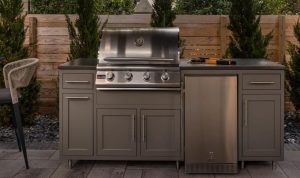
Affordable outdoor kitchen offers a fantastic opportunity to enhance your home while staying within budget. With the right design ideas, materials, and equipment, creating a vibrant outdoor cooking space is within reach for everyone. This guide explores a variety of cost-effective strategies to help you build the outdoor kitchen of your dreams without breaking the bank.
From innovative layouts that maximize space to essential appliances that won’t drain your wallet, we’ll delve into effective solutions that highlight practicality and aesthetics. Whether you prefer a DIY approach or are considering professional installation, maintaining budget-friendly options is key to enjoying your outdoor culinary experience.
Affordable Outdoor Kitchen Design Ideas
Designing an outdoor kitchen doesn’t have to break the bank. There are several styles and material options that can create a beautiful and functional space at a fraction of the cost of traditional setups. By incorporating affordable design elements, you can enjoy an outdoor cooking area that enhances your home and outdoor living experience.
Design Styles for Affordable Outdoor Kitchens
When selecting a design style for your outdoor kitchen, consider options that are not only budget-friendly but also complement your existing home. Some popular styles include:
- Rustic: Utilizing natural wood and stone can provide a warm, inviting atmosphere while being cost-effective.
- Modern: A sleek design with minimalistic features can be achieved with concrete or metal surfaces.
- Traditional: Opt for classic brick or tile designs that evoke a timeless appeal without excessive costs.
Cost-Effective Materials for Outdoor Cooking Spaces
Choosing the right materials is crucial in keeping your outdoor kitchen budget-friendly. Some cost-effective materials include:
- Concrete: Affordable, durable, and versatile for countertops and flooring.
- Wood: Treated lumber can provide an attractive finish for cabinetry at lower costs.
- Metal: Stainless steel appliances are often available at competitive prices and offer longevity.
Layout Options for Maximizing Space and Functionality
Creating a functional layout ensures that your outdoor kitchen meets your cooking and entertaining needs. Consider these layout options:
- Galley Style: Ideal for narrow spaces, this layout allows for efficient movement between stations.
- L-Shaped: This design maximizes corner spaces while providing ample counter space.
- Island Design: A central island can serve multiple purposes, from food preparation to seating.
Budget-Friendly Outdoor Kitchen Equipment: Affordable Outdoor Kitchen
Equipping your outdoor kitchen doesn’t have to be expensive. Prioritizing essential items and making smart purchases can lead to a fully functional setup without overspending.
Essential Appliances for an Outdoor Kitchen on a Budget
When outfitting your outdoor kitchen, focus on key appliances that enhance functionality:
- Grill: A quality grill is essential for outdoor cooking; opt for a gas or charcoal model based on your preference.
- Refrigerator: A compact outdoor refrigerator can help keep drinks and ingredients cool.
- Pizza Oven: Consider a portable pizza oven for a fun cooking experience without a hefty investment.
Selecting Affordable but Durable Outdoor Cooking Tools
Durable cooking tools are essential for maximizing your outdoor kitchen’s potential. Look for:
- Stainless Steel Utensils: They offer durability and resistance to rust.
- Cast Iron Cookware: Known for heat retention, cast iron lasts for years with proper care.
- High-Quality Grill Covers: Protect your investment and extend the lifespan of your grill.
Comparing Brands Offering Value-for-Money Equipment
Research various brands to find those that provide quality at reasonable prices. Brands like Weber, Char-Broil, and Brinkmann often offer great value in outdoor cooking equipment. Look for customer reviews and warranty information to make informed purchases.
DIY vs. Professional Installation
Deciding between a DIY outdoor kitchen project and hiring professionals involves weighing the pros and cons of each approach.
Pros and Cons of a DIY Outdoor Kitchen Project
Taking on a DIY project can save money but can also come with challenges. Here are some key points to consider:
- Pros: Cost savings, customization, and hands-on satisfaction.
- Cons: Time-consuming, potential for mistakes, and lack of professional finish.
Choosing Professional Installation Services
When opting for professional installation, consider these factors:
- Experience: Select contractors with proven experience in outdoor kitchen installations.
- References: Ask for references or look for online reviews to gauge customer satisfaction.
- Cost Estimates: Obtain multiple estimates to compare pricing and services offered.
Estimating Costs Related to DIY and Professional Options
To accurately estimate your budget, create a detailed list of materials and labor costs for both DIY and professional options. Consider using online calculators or budgeting apps to help keep track of expenses.
Outdoor Kitchen Maintenance on a Budget
Maintaining your outdoor kitchen doesn’t have to be expensive. Regular upkeep ensures longevity and functionality of your appliances.
Maintaining Outdoor Kitchen Appliances Affordably
Routine maintenance can prevent costly repairs. Here are some budget-friendly maintenance tips:
- Regular Cleaning: Clean grills and appliances after each use to prevent build-up.
- Protective Covers: Use covers for appliances to shield them from weather damage.
- Seasonal Inspections: Check for any wear or tear and address issues promptly.
Checklist for Seasonal Upkeep
To keep your outdoor kitchen in top shape, follow this seasonal maintenance checklist:
- Inspect and clean appliances.
- Check gas lines for leaks.
- Reapply sealant on wood surfaces if necessary.
Repairing Common Outdoor Kitchen Issues
You can often handle minor repairs without professional help. Some common issues and solutions include:
- Rusty Grills: Use a wire brush to clean rust spots and apply high-heat paint to protect.
- Leaky Faucets: Replace washers or O-rings to stop leaks.
- Clogged Drains: Use a mixture of baking soda and vinegar to clear minor clogs.
Enhancing Outdoor Spaces Economically
Beautifying the area surrounding your outdoor kitchen can elevate your entire outdoor space without overspending.
Beautifying Surrounding Areas of an Outdoor Kitchen
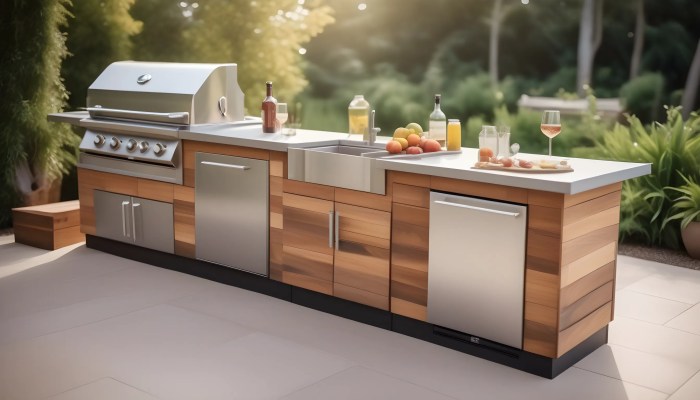
Consider these budget-friendly enhancements to spruce up your outdoor kitchen area:
- Decorative Stones: Use gravel or pavers to create pathways or define spaces.
- Outdoor Rugs: Add comfort and style with weather-resistant rugs that enhance your dining area.
- Lighting Features: Install solar-powered garden lights for an inviting ambiance.
Affordable Outdoor Furniture
Selecting the right furniture can complement your outdoor kitchen. Look for:
- Folding Tables and Chairs: Space-saving and versatile options for dining.
- Recycled Plastic Furniture: Durable and eco-friendly choices that require little maintenance.
- Bench Seating: Built-in or standalone benches provide extra seating without taking up much space.
Using Plants and Natural Elements
Incorporating plants into your outdoor kitchen space can enhance its aesthetic appeal without substantial costs:
- Herb Garden: Grow your own herbs for cooking while beautifying the area.
- Decorative Planters: Use colorful pots to add visual interest.
- Natural Screens: Incorporate trellises with climbing plants to create privacy and shade.
Creative Outdoor Kitchen Layouts for Small Spaces
Limited space doesn’t have to hinder your outdoor kitchen dreams. Creative layouts can maximize functionality without sacrificing style.
Innovative Layouts for Compact Outdoor Kitchens
Try these innovative layouts for small outdoor cooking spaces:
- Compact U-Shape: This layout utilizes three sides for cooking, prep, and seating.
- Foldable Surfaces: Utilize foldable tables and countertops that can be expanded when needed.
- Vertical Storage: Utilize wall space for shelving and hanging utensils to save ground space.
Multi-Functional Furniture Examples
Multi-functional furniture can save space and provide flexibility in small outdoor kitchens:
- Storage Benches: Benches that double as storage units for equipment and supplies.
- Drop-Leaf Tables: Tables that can be expanded or contracted based on the number of guests.
- Outdoor Ottomans: Ottomans that provide additional seating and storage options.
Design Techniques to Expand Visual Space
Consider these design techniques to make small outdoor cooking areas feel larger:
- Light Color Palettes: Use light colors for surfaces and decor to create an open feel.
- Mirrors: Incorporating reflective surfaces can add depth and brightness.
- Open Shelving: Avoid bulky cabinets; use open shelving for a more spacious look.
Outdoor Kitchen Lighting Solutions on a Budget
Proper lighting is essential for both safety and ambiance in outdoor kitchens. Affordable lighting options can enhance your cooking space effectively.
Importance of Lighting in an Outdoor Kitchen Environment
Good lighting allows for safe food preparation and enhances the overall atmosphere, making it inviting for guests.
Affordable Lighting Options
Consider these budget-friendly lighting options for your outdoor kitchen:
- String Lights: Easy to install and add a charming glow.
- Solar Path Lights: Provide illumination without the cost of electricity.
- Battery-Operated Lanterns: Portable and can be placed wherever needed.
Creative DIY Outdoor Lighting Fixtures, Affordable outdoor kitchen
Creating your own lighting fixtures can be both fun and cost-effective:
- Repurposed Jars: Use mason jars with candles or fairy lights for a rustic look.
- Wooden Pallet Lights: Create light fixtures from reclaimed wood for an eco-friendly option.
- Hanging Bottles: Use glass bottles as hanging light fixtures for a unique design element.
Sustainable Practices for Affordable Outdoor Kitchens
Incorporating sustainable practices into your outdoor kitchen design can help reduce costs and promote environmental responsibility.
Eco-Friendly Materials in Outdoor Kitchen Design
Utilizing eco-friendly materials not only benefits the planet but can also save money in the long run. Consider these options:
- Recycled Materials: Use reclaimed wood or recycled metal for countertops and cabinetry.
- Natural Stone: Durable and requires minimal maintenance, making it a sustainable choice.
- Bamboo: A fast-growing, renewable resource perfect for various kitchen elements.
Energy-Efficient Outdoor Cooking Methods
Optimize your outdoor cooking methods to be more energy-efficient:
- Use of Charcoal Grills: They often consume less energy than gas grills.
- Solar Cookers: Harness the power of the sun for an eco-friendly cooking option.
- Efficient Cookware: Invest in cookware that retains heat effectively, reducing cooking time.
Using Locally Sourced Materials
Incorporating locally sourced materials can help reduce costs and support local businesses. Look for:
- Local Stone: Using stone from nearby quarries can lower transportation costs.
- Regional Timber: Sourcing wood from local suppliers often results in cheaper prices.
- Community Markets: Find affordable herbs and plants at local farmers’ markets for landscaping.